無與倫比的CKS熱門認證和保證Linux Foundation CKS考試成功與高效的CKS最新題庫資源
Wiki Article
此外,這些KaoGuTi CKS考試題庫的部分內容現在是免費的:https://drive.google.com/open?id=1hUSA_3GSJgHmLguWcwWoLgaWPDOSMKIc
“如果放棄了,那比賽同時也就結束了。”這是來自安西教練的一句大家都熟知的名言。比賽是這樣,同樣考試也是這樣的。有很多人因為沒有充分的時間準備考試從而放棄了參加CKS認證考試。但是,如果使用了好的資料,即使只有很短的時間來準備,你也完全可以以高分通過CKS考試。不相信嗎?KaoGuTi的考古題就是這樣的資料。趕快試一下吧。
Linux Foundation CKS(認證Kubernetes安全專家)考試是面向想要展示其保障Kubernetes集群專業技能的專業人士的高級認證。該認證旨在測試設計、部署和管理安全的Kubernetes集群所需的技能和知識。對於參與管理雲原生應用程序和基礎架構的IT專業人士來說,這是一個重要的認證。
CKS 證書是供應商中立的,這意味著它不依賴於任何特定技術或供應商。這使得 IT 專業人員能夠展示他們在 Kubernetes 安全性方面的能力,而不受他們使用的工具或平台的限制。考試涵蓋了廣泛的主題,包括 Kubernetes 架構和組件、安全最佳實踐、網絡安全、集群硬化以及監控和日誌記錄。通過考試的候選人將能夠識別和減輕 Kubernetes 環境中的安全風險和漏洞。
CKS 認證考試是業界公認的認證,受到雇主高度重視。對於專業人士來說,這是展示他們在保護 Kubernetes 部署方面的專業知識和致力於保持最新安全最佳實踐的方式。該認證還是一種方式,讓組織識別合格的專業人士,他們可以幫助組織保護 Kubernetes 集群並保護其敏感數據。
高通過率的CKS熱門認證和認證考試的領導者材料和有效的CKS最新題庫資源
如果你購買了KaoGuTi的教材,那麼你就獲得了一年免費更新的服務。當考古題被更新時,KaoGuTi會馬上將最新版的資料發送到你的郵箱。你也可以隨時要求我們為你提供最新版的考古題。如果你想瞭解最新的考試試題,即使你已經成功通過CKS考試,KaoGuTi也會為你免費更新CKS考試考古題。
最新的 Kubernetes Security Specialist CKS 免費考試真題 (Q44-Q49):
問題 #44
Fix all issues via configuration and restart the affected components to ensure the new setting takes effect.
Fix all of the following violations that were found against the API server:- a. Ensure the --authorization-mode argument includes RBAC b. Ensure the --authorization-mode argument includes Node c. Ensure that the --profiling argument is set to false Fix all of the following violations that were found against the Kubelet:- a. Ensure the --anonymous-auth argument is set to false.
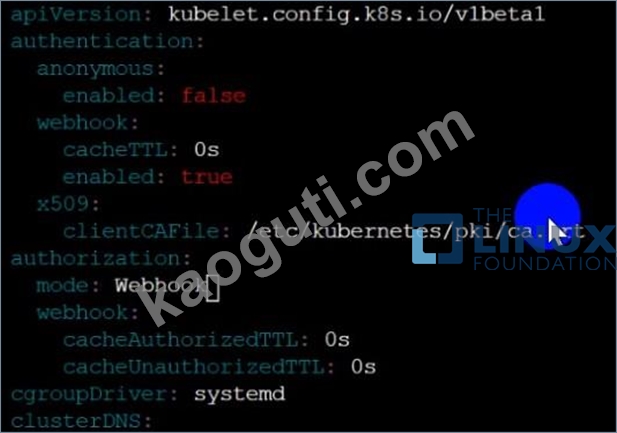
b. Ensure that the --authorization-mode argument is set to Webhook.
Fix all of the following violations that were found against the ETCD:-
a. Ensure that the --auto-tls argument is not set to true
Hint: Take the use of Tool Kube-Bench
答案:
解題說明:
API server:
Ensure the --authorization-mode argument includes RBAC
Turn on Role Based Access Control. Role Based Access Control (RBAC) allows fine-grained control over the operations that different entities can perform on different objects in the cluster. It is recommended to use the RBAC authorization mode.
Fix - Buildtime
Kubernetes
apiVersion: v1
kind: Pod
metadata:
creationTimestamp: null
labels:
component: kube-apiserver
tier: control-plane
name: kube-apiserver
namespace: kube-system
spec:
containers:
- command:
+ - kube-apiserver
+ - --authorization-mode=RBAC,Node
image: gcr.io/google_containers/kube-apiserver-amd64:v1.6.0
livenessProbe:
failureThreshold: 8
httpGet:
host: 127.0.0.1
path: /healthz
port: 6443
scheme: HTTPS
initialDelaySeconds: 15
timeoutSeconds: 15
name: kube-apiserver-should-pass
resources:
requests:
cpu: 250m
volumeMounts:
- mountPath: /etc/kubernetes/
name: k8s
readOnly: true
- mountPath: /etc/ssl/certs
name: certs
- mountPath: /etc/pki
name: pki
hostNetwork: true
volumes:
- hostPath:
path: /etc/kubernetes
name: k8s
- hostPath:
path: /etc/ssl/certs
name: certs
- hostPath:
path: /etc/pki
name: pki
Ensure the --authorization-mode argument includes Node
Remediation: Edit the API server pod specification file /etc/kubernetes/manifests/kube-apiserver.yaml on the master node and set the --authorization-mode parameter to a value that includes Node.
--authorization-mode=Node,RBAC
Audit:
/bin/ps -ef | grep kube-apiserver | grep -v grep
Expected result:
'Node,RBAC' has 'Node'
Ensure that the --profiling argument is set to false
Remediation: Edit the API server pod specification file /etc/kubernetes/manifests/kube-apiserver.yaml on the master node and set the below parameter.
--profiling=false
Audit:
/bin/ps -ef | grep kube-apiserver | grep -v grep
Expected result:
'false' is equal to 'false'
Fix all of the following violations that were found against the Kubelet:- Ensure the --anonymous-auth argument is set to false.
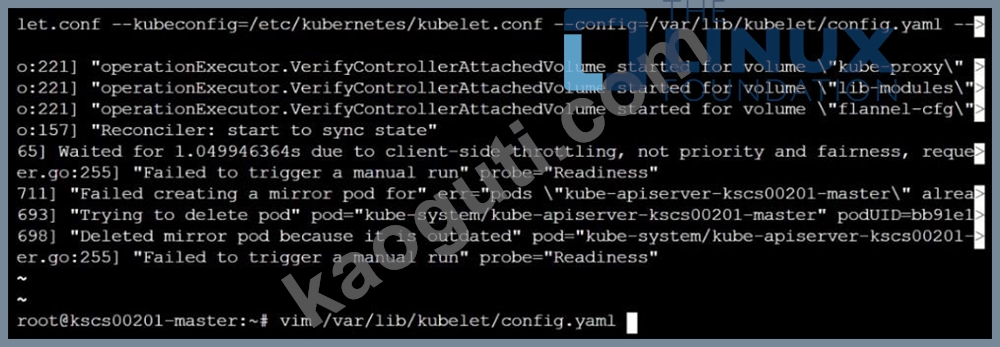
Remediation: If using a Kubelet config file, edit the file to set authentication: anonymous: enabled to false. If using executable arguments, edit the kubelet service file /etc/systemd/system/kubelet.service.d/10-kubeadm.conf on each worker node and set the below parameter in KUBELET_SYSTEM_PODS_ARGS variable.
--anonymous-auth=false
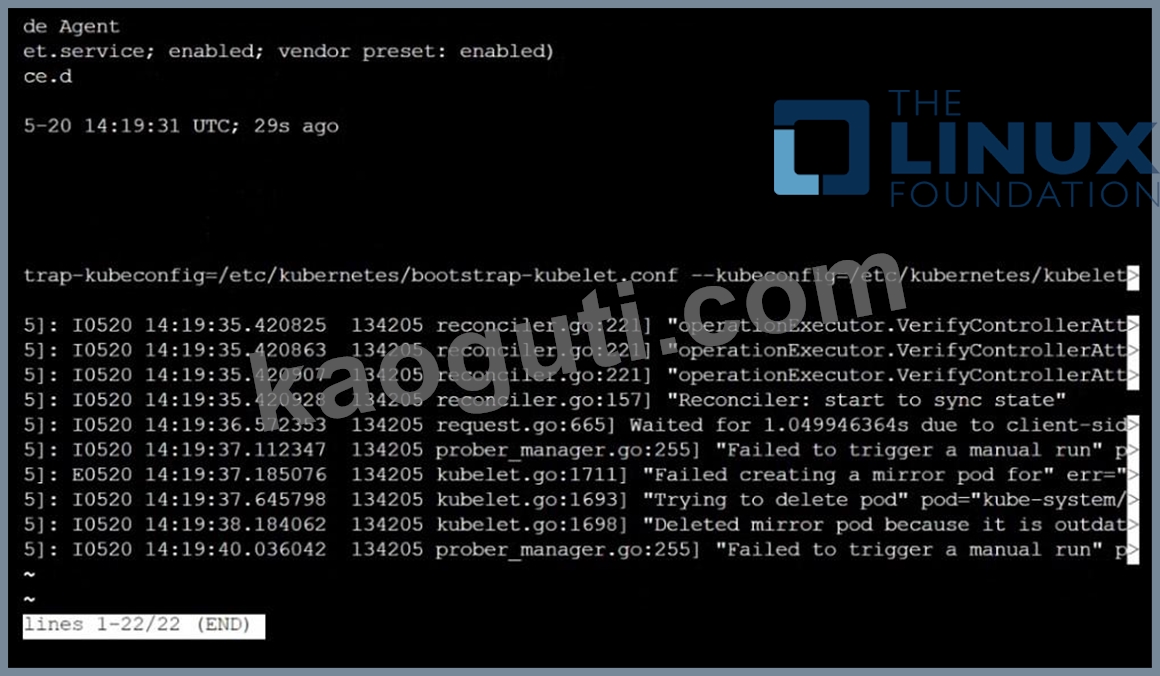
Based on your system, restart the kubelet service. For example:
systemctl daemon-reload
systemctl restart kubelet.service
Audit:
/bin/ps -fC kubelet
Audit Config:
/bin/cat /var/lib/kubelet/config.yaml
Expected result:
'false' is equal to 'false'
2) Ensure that the --authorization-mode argument is set to Webhook.
Audit
docker inspect kubelet | jq -e '.[0].Args[] | match("--authorization-mode=Webhook").string' Returned Value: --authorization-mode=Webhook Fix all of the following violations that were found against the ETCD:- a. Ensure that the --auto-tls argument is not set to true Do not use self-signed certificates for TLS. etcd is a highly-available key value store used by Kubernetes deployments for persistent storage of all of its REST API objects. These objects are sensitive in nature and should not be available to unauthenticated clients. You should enable the client authentication via valid certificates to secure the access to the etcd service.
Fix - Buildtime
Kubernetes
apiVersion: v1
kind: Pod
metadata:
annotations:
scheduler.alpha.kubernetes.io/critical-pod: ""
creationTimestamp: null
labels:
component: etcd
tier: control-plane
name: etcd
namespace: kube-system
spec:
containers:
- command:
+ - etcd
+ - --auto-tls=true
image: k8s.gcr.io/etcd-amd64:3.2.18
imagePullPolicy: IfNotPresent
livenessProbe:
exec:
command:
- /bin/sh
- -ec
- ETCDCTL_API=3 etcdctl --endpoints=https://[192.168.22.9]:2379 --cacert=/etc/kubernetes/pki/etcd/ca.crt
--cert=/etc/kubernetes/pki/etcd/healthcheck-client.crt --key=/etc/kubernetes/pki/etcd/healthcheck-client.key get foo failureThreshold: 8 initialDelaySeconds: 15 timeoutSeconds: 15 name: etcd-should-fail resources: {} volumeMounts:
- mountPath: /var/lib/etcd
name: etcd-data
- mountPath: /etc/kubernetes/pki/etcd
name: etcd-certs
hostNetwork: true
priorityClassName: system-cluster-critical
volumes:
- hostPath:
path: /var/lib/etcd
type: DirectoryOrCreate
name: etcd-data
- hostPath:
path: /etc/kubernetes/pki/etcd
type: DirectoryOrCreate
name: etcd-certs
status: {}
Explanation: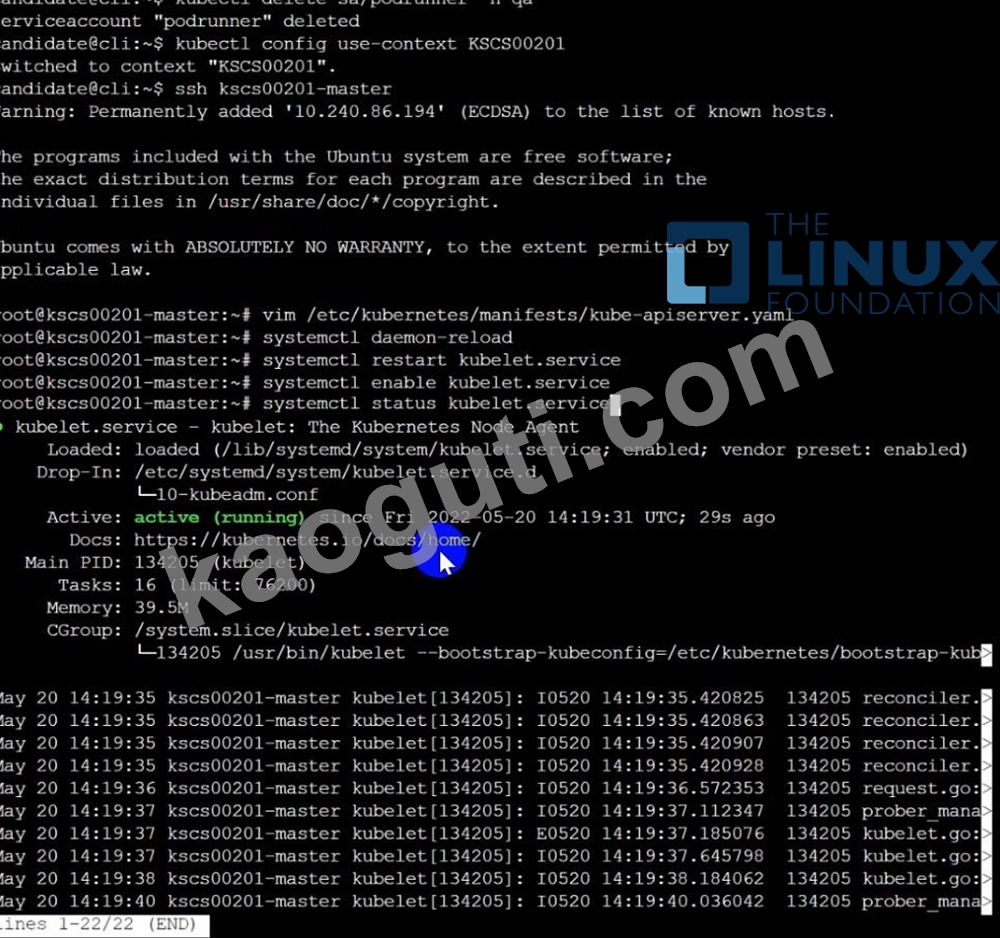
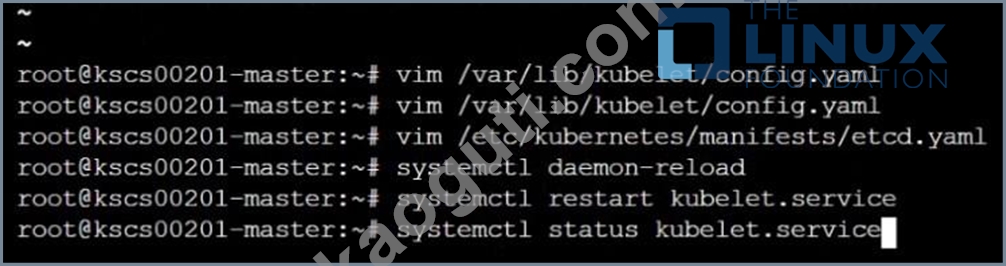
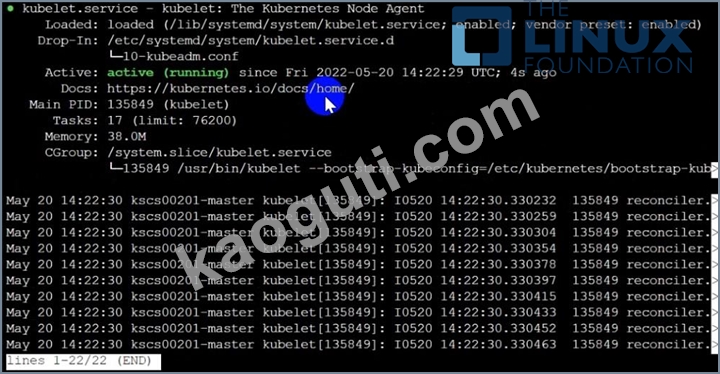

問題 #45
You're in charge of enforcing a secure supply chain in your Kubernetes environment. You need to ensure that all container images deployed to your cluster are scanned for known vulnerabilities before being deployed. How would you achieve this?
答案:
解題說明:
Solution (Step by Step) :
1. Choose a Vulnerability Scanner:
- Select a reputable container image vulnerability scanner. Popular options include:
- Aqua Security: A comprehensive platform that offers image scanning, runtime security, and policy enforcement.
- JFrog Xray: A vulnerability scanner that integrates with JFrog Artifactory, providing deep scanning capabilities.
- Ancnore Engine: An open-source scanner that can be deployed on-premises or in the Cloud.
2. Integrate with Your Registry (if applicable):
- If your vulnerability scanner support integration with your registry (e.g., Docker Hub, Harbor), configure it to scan images automatically as they are pushed.
- This approach provides real-time vulnerability scanning, ensuring that only secure images are available for deployment.
3. Implement a Scanning Pipeline (if needed):
- If your chosen scanner doesn't integrate with your registry, build a scanning pipeline using a CI/CD tool like Jenkins, GitLab Cl, or CircleCl.
- The pipeline should:
- Pull the image from the registry.
- Run the vulnerability scanner against the image.
- Fail the build if any critical vulnerabilities are found.
- If no critical vulnerabilities are found, push the scanned image to the registry with a tag indicating its scan status.
4. Configure Kubernetes Policies:
- Use Kubernetes policies (like Pod Security Policies or Admission Controllers) to enforce the following:
- Restrict deployments to images with a "scanned" tag: This ensures only images that have undergone vulnerability scanning are deployed.
- Block deployments of images with known critical vulnerabilities: This prevents deployment of images with unacceptable risks.
5. Monitor Scanning Results:
- Continuously monitor vulnerability scanning results.
- Keep track of vulnerabilities found and their severity.
- Update your policies to reflect changes in vulnerability scanning results.
6. Remediation and Patching:
- Have a process in place to remediate and patch vulnerabilities found in images.
- Work with developers and security teams to address vulnerabilities promptly.
問題 #46
SIMULATION
Use the kubesec docker images to scan the given YAML manifest, edit and apply the advised changes, and passed with a score of 4 points.
kubesec-test.yaml
apiVersion: v1
kind: Pod
metadata:
name: kubesec-demo
spec:
containers:
- name: kubesec-demo
image: gcr.io/google-samples/node-hello:1.0
securityContext:
readOnlyRootFilesystem: true
Hint: docker run -i kubesec/kubesec:512c5e0 scan /dev/stdin < kubesec-test.yaml
- A. Send us the Feedback on it.
答案:A
問題 #47
You are tasked with implementing a security policy that prohibits the use of privileged containers in your Kubernetes cluster. Implement a solution that uses KubeLinter to enforce this policy by automatically scanning all deployments and preventing deployments that violate the policy.
答案:
解題說明:
Solution (Step by Step):
1. Install KubeLinter: Download and install the 'kubevar binary from the official GitHub repository.
2. Create a custom KubeLinter check: Define a custom check that prohibits the use of privileged containers. This check can be defined in a separate
YAML file or embedded in your '.kubeval.yaml configuration file.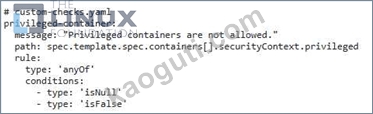
3. Configure KubeLinter to use the custom check: Add the custom check to your .kuoeval.yaml configuration file.
4. Integrate KubeLinter into your CI/CD pipeline: Add a step to your pipeline that runs KubeLinter against your deployment YAML manifests. This step should be executed before the manifests are deployed to the cluster.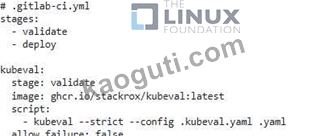
5. (Optional) Implement an admission controller: For real-time enforcement, deploy an admission controller that uses KubeLinter to validate deployments as they are created or updated. This will prevent any deployments that violate the policy from being created in the cluster. Tools like Kyverno or Gatekeeper can be used to create and enforce such policies.
問題 #48
Context
A container image scanner is set up on the cluster, but it's not yet fully integrated into the cluster s configuration. When complete, the container image scanner shall scan for and reject the use of vulnerable images.
Task
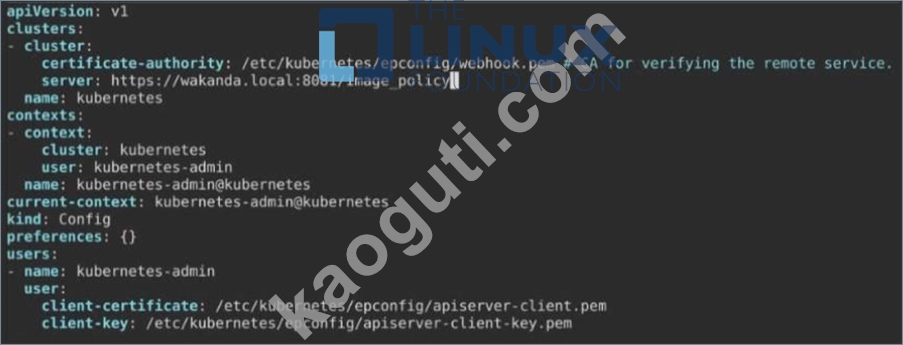
Given an incomplete configuration in directory /etc/kubernetes/epconfig and a functional container image scanner with HTTPS endpoint https://wakanda.local:8081 /image_policy :
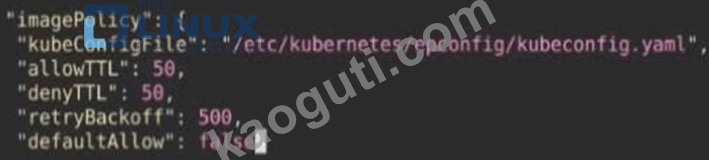
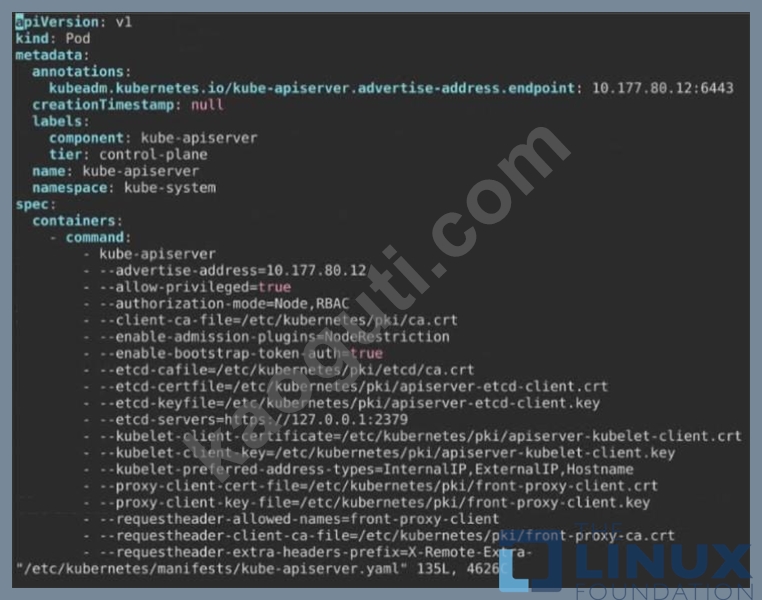
1. Enable the necessary plugins to create an image policy
2. Validate the control configuration and change it to an implicit deny
3. Edit the configuration to point to the provided HTTPS endpoint correctly Finally, test if the configuration is working by trying to deploy the vulnerable resource /root/KSSC00202/vulnerable-resource.yml.
答案:
解題說明: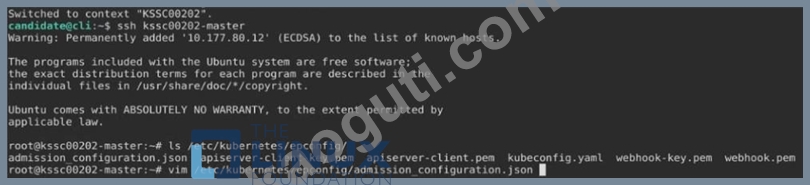



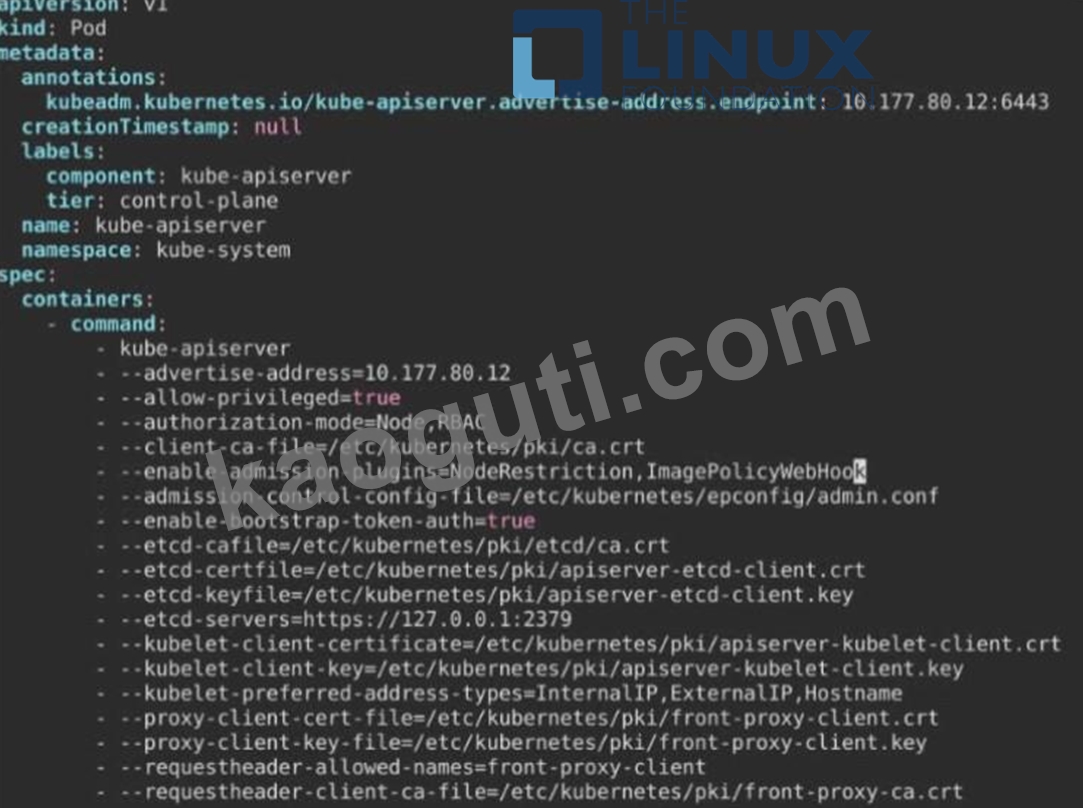
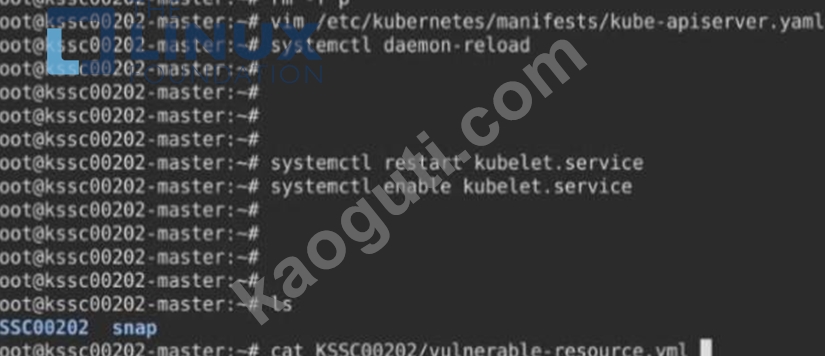
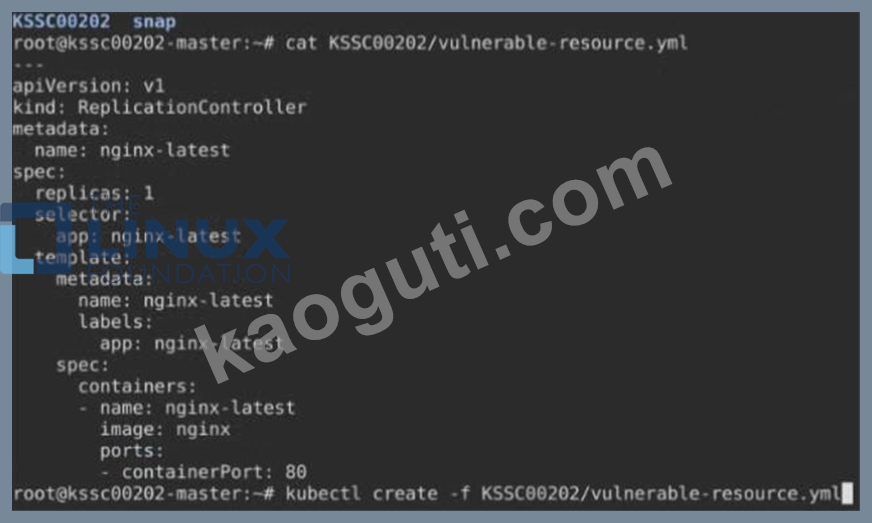
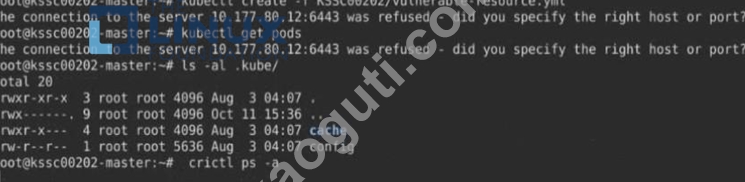
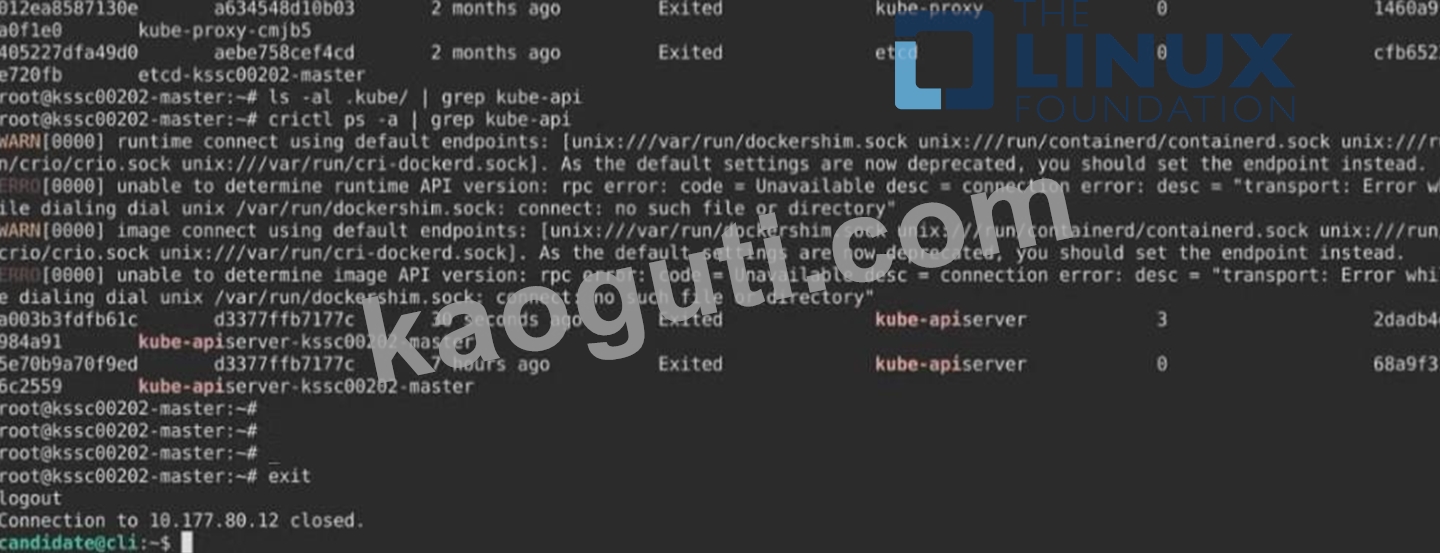
問題 #49
......
KaoGuTi是一個可以成就很多IT人士的夢想的網站。KaoGuTi能為參加IT相關認證考試的考生提供他們想要的資料來助幫助他們通過考試。你還在為通過Linux Foundation CKS認證考試苦惱嗎?你有想過購買Linux Foundation CKS認證考試相關的課程來輔助你嗎?KaoGuTi可以為你提供這個便利,KaoGuTi提供的培訓資料可以有效地幫你通過認證考試。KaoGuTi提供的練習題幾乎真題是一樣的。有了KaoGuTi為你提供的精確的Linux Foundation CKS認證考試的練習題和答案,你可以以高分通過Linux Foundation CKS認證考試。
CKS最新題庫資源: https://www.kaoguti.com/CKS_exam-pdf.html
- CKS試題 ???? CKS考試證照 ???? CKS證照 ???? 複製網址《 tw.fast2test.com 》打開並搜索「 CKS 」免費下載CKS證照資訊
- CKS證照資訊 ???? CKS證照 ???? CKS考試證照 ???? 在{ www.newdumpspdf.com }上搜索✔ CKS ️✔️並獲取免費下載CKS證照
- 使用高質量的考試CKS熱門認證準備您的Linux Foundation CKS考試,當然通過 ???? 進入⮆ www.vcesoft.com ⮄搜尋《 CKS 》免費下載CKS認證指南
- 我們提供最有效的CKS熱門認證,保證妳100%通過考試 ???? 進入✔ www.newdumpspdf.com ️✔️搜尋“ CKS ”免費下載CKS題庫下載
- 我們提供最有效的CKS熱門認證,保證妳100%通過考試 ???? ➡ www.newdumpspdf.com ️⬅️是獲取☀ CKS ️☀️免費下載的最佳網站CKS題庫下載
- CKS題庫資料 ???? CKS考題資源 ???? CKS最新考題 ???? 免費下載⇛ CKS ⇚只需進入➡ www.newdumpspdf.com ️⬅️網站CKS熱門認證
- CKS熱門認證 ???? CKS PDF ???? CKS證照 ???? 透過✔ www.newdumpspdf.com ️✔️搜索“ CKS ”免費下載考試資料CKS PDF
- CKS最新考題 ???? CKS證照 ???? CKS在線考題 ???? 打開網站➡ www.newdumpspdf.com ️⬅️搜索✔ CKS ️✔️免費下載CKS學習筆記
- 最新CKS題庫資源 ???? 最新CKS題庫資源 ???? CKS熱門認證 ???? 立即在▛ www.newdumpspdf.com ▟上搜尋⏩ CKS ⏪並免費下載CKS熱門考古題
- 值得信賴的CKS熱門認證和資格考試中的領先供應商和最新更新CKS:Certified Kubernetes Security Specialist (CKS) ✴ “ www.newdumpspdf.com ”上的免費下載➥ CKS ????頁面立即打開CKS考試證照
- 受信任的CKS熱門認證和有用的Linux Foundation認證培訓 - 值得信賴的Linux Foundation Certified Kubernetes Security Specialist (CKS) ❤ ▛ tw.fast2test.com ▟上搜索“ CKS ”輕鬆獲取免費下載最新CKS題庫
- free-bookmarking.com, bookmarktiger.com, www.stes.tyc.edu.tw, bookmarkshq.com, sabrinaudbt971471.blogacep.com, bookmarkboom.com, kbookmarking.com, www.stes.tyc.edu.tw, safajnyq742294.kylieblog.com, matteoacun023944.blogdosaga.com, Disposable vapes
2026 KaoGuTi最新的CKS PDF版考試題庫和CKS考試問題和答案免費分享:https://drive.google.com/open?id=1hUSA_3GSJgHmLguWcwWoLgaWPDOSMKIc
Report this wiki page